By That Green Union Guy - IWW Environmental Unionism Caucus, November 11, 2015
 Author's Note: This article is a sequel of sorts to my previous piece, Unions and the Climate Justice Movement, which briefly mentions the No Coal in Oakland campaign. The image, depicted at the right, compares a pro-capitalist-logging poster (yellow, near right) ostensibly created by timber workers (but actually crafted by the employers) to mobilize support for a counter-demonstration to a rally and march, held in Fort Bragg in July 1990, organized by the Redwood Summer coalition (which included timber workers). The green poster (far right), represents the Redwood Summer coalition's response, and accurately summarizes their position on timber workers and timber jobs.
At first glance, the Oakland City Council meeting, held on September 21, 2015 looked much like many public hearings where public opposition had organized in response to the plans, practices, or proposals of capitalist interests that threatened the environment. For most of the evening, and well into the night, council members and the Mayor watched and listened as speaker after speaker (out of a total of over 500) either spoke in favor (or against) coal exports or ceded their time to their allies. On one side were a widely diverse group of activists, organized by a coalition known as No Coal in Oakland-- adorned in red (union made and printed) T-shirts--opposed to plans to export coal through a proposed Oakland Bulk and Oversized Terminal (OBOT), as part of the Oakland Global Trade and Logistics Center (or Oakland Global), and on the other were the project's supporters, dressed in business attire accompanied by several dozen union workers, many of them from the Laborers' Union, dressed in yellow. As is often the case, the project's supporters tried to frame the opposition as being composed of insensitive outsiders, and themselves and the supporting "workers" as placing the economic interests of Oakland and its residents above all else. "We support good paying union jobs that will help the struggling, predominantly African-American residents of west Oakland" opined the supporters, trying to suggest that those in opposition didn't.
This is an old, and shopworn script, that has been trotted out numerous times in the past quarter century or more. Anyone who has experienced or studied the "Timber Wars" that took place in the Pacific Northwest during the late 1980s and early-to-mid 1990s will recall the armies of loggers and mill-workers decked out in yellow shirts, sporting yellow foam car radio antennae balls or yellow ribbons who would show up en massé (at the behest of their employers, often with pay) to oppose limits to clear-cutting or protections for the Northern Spotted Owl and to denounce (often) green shirted environmentalists as "unwashed-out-of-town-jobless-hippies-on-drugs" and/or upper middle class "elitists" (or--defying logic--both). Sometimes, in drawn out campaigns, the employers have often furthered this illusion by creating false front "Astroturf" groups, ostensibly composed of workers, to distract attention away from themselves.
The truth is far much more complex and nuanced, of course. Usually the "jobs" promised by the projects' supporters often don't materialize (indeed, the opposite--namely automation, downsizing, and outsourcing--usually occurs). Those in opposition to environmentally destructive practices and proposals are usually composed of and led by locals, most of whom are, themselves, gainfully employed, and sympathetic to the needs and concerns of the affected workers (in fact, the opposition's counter proposals, if well thought out, do more to create "jobs" and job security than those in support of the project). Meanwhile, the actual level of support among the rank and file workers purportedly backing up the capitalists interests could accurately be described as a mile wide and an inch deep, at best. And the bosses? When they speak of jobs, they actually refer to profits. Nevertheless, in the past, the capitalist media has typically and dutifully reported that these projects are opposed by "green clad environmentalists" (or red in this particular case) and supported by "yellow clad workers" (often neglecting to draw any distinction between the workers and their employers).
Therefore, it is both surprising and refreshing, that in spite of the attempts by the employing class to replay that same script on September 21, 2015 in Oakland, the attempt backfired, due to the diligent and tireless organizing by their grassroots opposition. A closer examination of what happened, and how the opposition organized, will illustrate why this is so and how others can duplicate the organizers' efforts to defeat further attempts by capitalist interests to use divide and conquer tactics to push their climate and environment (not-to-mention job) destroying projects through.




 Marissa Mommaerts: I’m so happy this teleseminar is happening, because personally I believe that making social justice more explicit in our work is not only the right thing to do, it’s also the only way our movement is going to become powerful enough to rise to the challenges of our time. And I’m very excited to welcome a friend and mentor, someone I deeply respect and admire, Mateo Nube of Movement Generation, to lead today’s call.
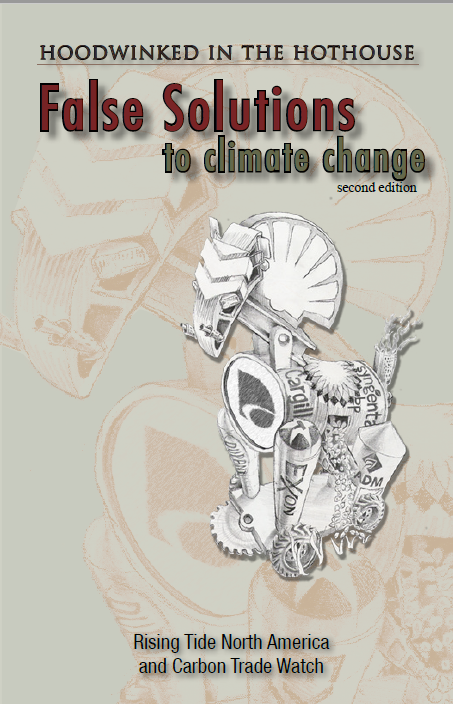 Desperate to avoid climate regulation that may affect profits, polluting corporations are working hand-in-hand with governments, presenting a dizzying array of false solutions that deepen inequalities in our societies. There is a clear agenda: Manage the climate crisis without compromising profits, the power structures or the economic system that got us here, even if that means exacerbating the problem. Wall Street financiers, the synthetic biology industry, “green” venture capitalists and a host of others are jumping on the “we care about the climate, too!” bandwagon.
 This site is not the official webpage of the Industrial Workers of the World.