You are here

agroecology

La Via Campesina Stands in solidarity with Kenyan Peasant League in the struggle against GMOs

By staff - La Via Campesina, November 1, 2023

We, La Via Campesina, the international peasant movement with over 182 local and national organisations in 81 countries from Africa, Asia Europe and Americas stands in solidarity with the Kenyan Peasants League (KPL) our member organization in their legal struggle to continue the ban on GMOs in Kenya. In October 2022 the Kenyan Government lifted the ban on importation and cultivation of genetically modified organisms (GMO) that had been in place for ten years.

The conservatory orders maintaining the GMO ban by the High Court in December 2022 and the decision of the Court of Appeal to uphold the conservatory orders due to a lack of adequate public participation in the decision by the government to lift the GMO ban gave a temporary relief to the struggle.

The legal struggle will start at the High Court soon. We call upon all social movements and activists to mobilize and support the Kenya Peasant League in their continued struggle against the lifting of the ban on importation and cultivation of genetically modified organisms (GMO) in Kenya.

We call on the government of Kenya to respect the rights of peasants to determine their future. Lifting the GMO ban goes against the rights of the peasants (article 10 – Right to Participation; 15- Right to Food and Food Sovereignty; 19 – Right to Seeds and 20 – Right to Biological Diversity) enshrined in the UN Declaration on the Rights of Peasants and Other People Working in Rural Areas (UNDROP).

Again, lifting the GMO ban contravenes Article 9 of the International Treaty on Plant Genetic Resources for Food and Agriculture (ITPGRFA), also known as “Seed Treaty”, which affirms that no law(s) should “limit any rights that farmers have to save, use, exchange and sell farm-saved seed/propagating material”. We know from experiences in many countries that have allowed GMO production that the local seed systems suffered a lot. The local biodiversity and the environment suffered too due to excessive use of toxic agro-inputs required to guarantee GMO crops maximum yield. People’s health suffered too.

We, thus believe that if the ban on GMOs is lifted, this will not only be a direct attack on the peasants way of life in Kenya, but the East African region and the African Continent as it will unleash the untold destruction of the peasant managed seeds systems. The continent is already under enormous pressure to reformed seed legislations in favour of commercial seed companies and big agribusinesses.

Peasants’ organizations and other social movements will continue to mobilize so that the general GMO ban in Kenya prevails.

Peasant Voices, Episode 2: The UN Declaration on the Rights of Peasants and Other People Working in Rural Areas (UNDROP)

CSIPM supports the Voluntary Guidelines on Gender Equality, cautions about omissions

Binding Treaty negotiations in the UN unveil linkages between transnational corporate impunity and imperialism

By staff - La Via Campesina, October 25, 2023

This week (23-27 October) United Nations member states resume historical negotiations in the ninth session at the United Nations (UN) in Geneva with the mandate to elaborate an international legally binding instrument to regulate, in international human rights law, the activities of transnational corporations (TNCs).

The consistent participation of members of communities affected by activities of transnational corporations, civil-society organisations, trade unions and social movements makes it one of the most strongly supported processes in the history of UN human rights treaty negotiations. The Global Campaign to Reclaim Peoples Sovereignty, Dismantle Corporate Power and Stop Impunity (Global Campaign), representing more than 260 million people globally affected by Transnational Corporations has, once again, a strong presence in Geneva, where it is contributing decisively to the negotiations.

At the opening day, a broad group of states blocked the adoption of the program of work because of their concerns about the new text’s failure to incorporate their views and address the core mandate of the treaty to focus on transnationals. They also raised broader concerns regarding the non-democratic and non-transparent methodology of the Chair of the process, Ecuador.

In particular, the African group –representing all 54 African states took the lead and was backed by numerous state delegates from Global South countries, such as Cuba, Bolivia, Venezuela, Pakistan, Iran and Saudi Arabia. The backlash was so strong that the Chair had to suspend the morning session to seek consensus, and was only able to proceed after conceding to use a track-changes version of the text, which reflected prior proposals of states they felt had been unfairly removed. The Chair was also forced to defend the shift in focus from transnational corporations to all businesses – a shift that accommodates the positions of the EU, US, other developed countries, as well as industry trade groups involved in the process. He insisted he was not trying to impose a new focus for the treaty, and agreed that it was not within his power to make such a shift and that issues of scope would decided through negotiations.

Peasant Voices, Episode 1: Road to 8th Conference

Climate Proletariat

A Manifesto for Food, Farming and Forestry

By staff - Land Workers Alliance, October 9, 2023

In the face of multiple but intersecting crises – from global warming and biodiversity loss, to public health and inequality – the urgency to build a more equitable and resilient food, farming and land-use system that works for both people and planet has never been greater. 
The manifesto, launched today to coincide with the 2024 Labour Party Conference, urges political parties to adopt policies and legislation which will help the UK build a food and land-use system rooted in food sovereignty and agroecology.

We believe that there is a golden opportunity, and a responsibility, for a new UK government to reboot the UK’s food, farming and land-use system, and implement policies that will support farmers and landworkers, regenerate nature, and provide affordable, nutritious food for all.

Throughout 2024 we will be working to build relationships with MPs to promote the manifesto and gather support for our key policy asks for a new government:

  1. Dynamic Public Procurement 
  2. Horticulture Strategy for England
  3. A Comprehensive New Entrants to Farming Support Scheme 
  4. Local Food Infrastructure Fund
  5. Continued Development of ELMS in England
  6. Trade Rules That Protect Farmer Livelihoods
  7. Investing in the Ecological Forestry Sector 
  8. Climate Finance for Agroecology 
  9. Land-use Strategy
  10. A Legally Enshrined Right to Food

Download a copy of this publication here (PDF).

How the Rural New Deal Could Shake up National Politics & Support Strong Rural Communities

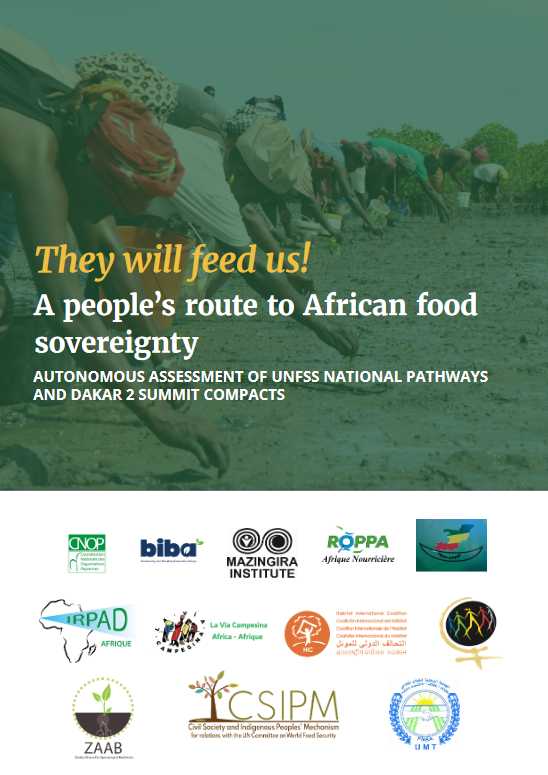
They will feed us! A people’s route to African food sovereignty

By Mamadou Goïta, et. al. - La Via Campesina, October 2023

African agriculture and food systems are evolving in an increasingly volatile context, impacted by climate change, conflicts, fragile and iniquitous globalised food systems, successive food crises, and unaddressed structural causes. Africa is one of the first victims of existing global inequalities, with a generally subordinate economic position, a limited voice in political decisions affecting the continent and its nations, and an extremely unequal distribution of the costs and benefits stemming from the exploitation of natural resources. In this context, the 2021 UN Food Systems Summit (UNFSS), widely denounced by people’s movements around the world as undemocratic and illegitimate, sought to kickstart a global process towards “food system transformation” and urged countries to develop their own “national pathways” for achieving this goal. The Dakar 2 – ‘Feed Africa Summit’ in January 2023, sponsored by the African Development Bank, also enjoined countries to present “national compacts” emphasising private sector investment.
African governments are calling for an end to dependence on food imports. However, instead of supporting peasant agroecology and territorial markets, they often favour a “modernisation” approach, focusing on investment in specialised crops and zones, privileging privatised seeds and so-called modern technologies, relying heavily on foreign private investment and promoting export-oriented value chains. The national pathways designed by African governments within the framework of the UNFSS, like the national compacts presented at the Dakar 2 Summit, could further reinforce this trend. This is why African peasant’s organisations (POs) and civil society organisations (CSOs) have decided to conduct their own autonomous assessment of these developments.

Download a copy of this publication here (PDF).

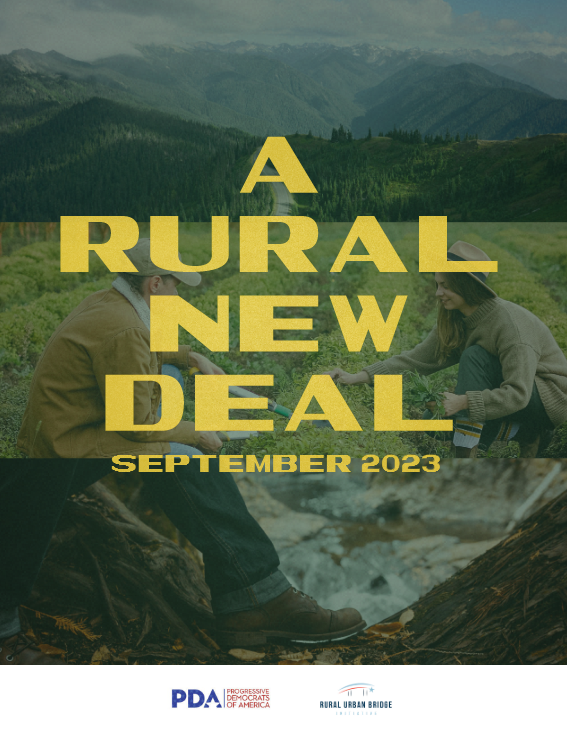
Progressive Groups Unveil 'Rural New Deal' to 'Reverse Decades of Economic Decline'

By Jessica Corbett - Common Dreams, September 13, 2023

"A Rural New Deal is urgently needed to build and rebuild local economies across rural America, reverse 40 years of wealth and corporate concentration, restore degraded lands, reclaim land and ownership opportunities for those whose land was taken by force or deceit, and ensure that communities and the nation can and do meet the basic needs of its people."

That's the opening line of a report released Tuesday by Progressive Democrats of America (PDA) and the Rural Urban Bridge Initiative (RUBI), which recognizes that "for too long, we've neglected, dismissed and underinvested" in rural U.S. communities, and offers "a broad policy blueprint to help steer progressive priorities" in such regions.

"Addressing the problems and concerns of rural America, isn't just the right thing to do, it is essential for the health of our nation. Progressives have ignored rural for too long," said PDA executive director Alan Minsky in a statement. "The Rural New Deal will change that."

Pages

The Fine Print I:

Disclaimer: The views expressed on this site are not the official position of the IWW (or even the IWW’s EUC) unless otherwise indicated and do not necessarily represent the views of anyone but the author’s, nor should it be assumed that any of these authors automatically support the IWW or endorse any of its positions.

Further: the inclusion of a link on our site (other than the link to the main IWW site) does not imply endorsement by or an alliance with the IWW. These sites have been chosen by our members due to their perceived relevance to the IWW EUC and are included here for informational purposes only. If you have any suggestions or comments on any of the links included (or not included) above, please contact us.

The Fine Print II:

Fair Use Notice: The material on this site is provided for educational and informational purposes. It may contain copyrighted material the use of which has not always been specifically authorized by the copyright owner. It is being made available in an effort to advance the understanding of scientific, environmental, economic, social justice and human rights issues etc.

It is believed that this constitutes a 'fair use' of any such copyrighted material as provided for in section 107 of the US Copyright Law. In accordance with Title 17 U.S.C. Section 107, the material on this site is distributed without profit to those who have an interest in using the included information for research and educational purposes. If you wish to use copyrighted material from this site for purposes of your own that go beyond 'fair use', you must obtain permission from the copyright owner. The information on this site does not constitute legal or technical advice.