You are here
E1. Indigenous
The Malignant Narrative: Coroner’s Inquests and Clinical Harm
IT IS OFTEN said that hindsight is 20/20. Coroner’s inquests are, by their nature, exercises in hindsight. We look backwards after someone has died, reconstructing timelines and events, examining decisions and systems, hearing from families, eyewitnesses, and experts, ultimately asking what happened, and why? Coroner’s inquests are open to the public, live-streamed but never recorded. They cannot make any findings of blame, liability, or legal culpability. These measures are taken to encourage transparency and clarity, with a goal to fundamentally understand the root causes contributing to a death, so a jury of the public can make recommendations that may prevent another death of a similar nature.
Over the past several years, I have had the difficult privilege of serving as an expert witness in coroner’s inquests examining the deaths of Indigenous people in Ontario, including Don Mamakwa and Roland McKay who experienced medical emergencies while in the custody of the Thunder Bay Police; Luke Moore, Lorraine Shaganash, Lizzie Sutherland, Mark Ferris and Douglas Taylor – five members of Constance Lake First Nation, who died during a catastrophic outbreak of blastomycosis (a rare fungal infection); and, most recently, 24-year-old Heather Winterstein, from Six Nations, who died of septic shock after repeatedly seeking emergency medical care.
Coroner’s inquests provide a window into how Indigenous people on Turtle Island access and receive healthcare. Each time we look backwards and are shocked by what we find. But increasingly, we must question whether hindsight is the right direction. What happens when we look forward instead?If we know that a population has poorer access to healthcare, less adequate housing and infrastructure, structural poverty, greater exposure to systemic violence, less control over the socioeconomic and political systems affecting their lives, and persistently worse health outcomes – and we reproduce these conditions generation after generation – how useful can our hindsight really be?
Premeditation is as powerful as hindsight.
Premeditation does not mean that every health disparity we see today is deliberately engineered for harm by providers. It means that the discriminatory structures that created these conditions were deliberately designed for these outcomes, the consequences have been documented for generations, and their continuation makes the disparities they produce increasingly foreseeable.
The Malignant Narrative and Medical ViolenceThis year, 2026, the Indian Act turned 150 years old. For over 150 years, Indigenous health outcomes in Canada have been shaped not by accident or oversight, but by design. At the center of this design is what can be understood as “the Malignant Narrative”: a church-sanctioned dehumanization and devaluation of Indigenous people, legally enforced by colonial officials. This narrative framed Indigenous people not only as inferior to European settlers, but as non-human and therefore effectively non-existent, with no more claim to land, rights, or privilege than the animals that roamed the forests.
The foundation of this narrative is legislative. The Indian Act consolidated extraordinary state control over First Nation identity, land, and governance. Residential schools, forced relocation, land dispossession, child apprehension, and jurisdictional fragmentation formed parts of the same colonial architecture. The Indian Act did not merely regulate Indigenous life, but it constructed a system of control that fundamentally altered the social determinants of health. It continues to structure how Indigenous people access, receive, and/or are denied healthcare today.
At what point does a pattern of disparities become so persistent, so reproducible, and so well documented that we stop calling the outcome unexpected? The system isn’t broken; it was built this way.
The Malignant Narrative is the colonial story that precedes Indigenous people into every institution, from criminal justice to education to healthcare to employment. It positions Indigenous people as less credible, less deserving of compassion and care, less compliant. Indigenous people are simply stereotypes, reinforced by the narrative, told over and over through time.A Coroner’s inquest can be an investigation into this architecture that is now recognized as medical violence. Indigenous people have been subjected to neglect, abuse, experimentation, forced interventions, and systemic under-servicing. While contemporary discourse often frames these harms as historical, the underlying logic has not disappeared. We have seen this Malignant Narrative institutionalized in modern healthcare settings through predictable patterns of higher disease burden, inadequate access to care, dismissal, delayed diagnosis, inadequate pain management, and premature discharge. It influences who we believe, whose pain we take seriously, whose behaviour requires explanation, and tends to assign personal responsibility for structural challenges. Ultimately, it influences who receives the benefit of our clinical curiosity, and who we protect from the consequences of our unconscious bias and assumptions.
One of the most dangerous features of the Malignant Narrative is that it is self-reinforcing. The system produces the conditions and then pathologizes Indigenous people for living within them. We see the normalization of disbelief whereby Indigenous patients’ reports of pain or illness are minimized. We see diagnostic hesitation where symptoms are attributed to stereotypes rather than investigated. We see triage decisions that systematically deprioritize Indigenous lives. We see a normalization of expected outcomes: Indigenous people are sicker and we are not shocked by increasing disparities in life expectancy.
Poverty becomes irresponsibility. Difficulty accessing healthcare becomes “non-compliance”. Unmet needs become “frequent fliers”. Substance use becomes a diagnosis rather than a risk factor, and mistrust of institutions becomes “unwillingness to engage”. These are not isolated realities, they are patterned outcomes of a system that continues to operate within the Malignant Narrative. The consequences of colonialism become evidence for the stereotypes that colonialism created.
Medical violence today rarely presents as overt abuse. It is more often expressed through structured neglect, a form of harm produced when systems consistently fail to respond appropriately to the needs of Indigenous patients.
This system operates with a nearly insurmountable inertia.
The Constance Lake Blastomycosis InquestMy work at the Constance Lake First Nation inquest made this painfully clear. I was retained by the Office of the Chief Coroner as an independent expert following the deaths of five community members during the 2021-22 blastomycosis outbreak. My mandate was not to determine whether individual physicians met the standard of care, nor to provide expertise on blastomycosis. I was asked to examine how stereotyping, unconscious bias and systemic racism can affect Indigenous peoples’ access to and receipt of healthcare, particularly during an infectious-disease outbreak.
What I encountered was not a simple story. The evidence showed many healthcare workers making extraordinary efforts in the midst of an unprecedented catastrophe. It also showed many community members repeatedly seeking medical attention as they became sicker, while others remained at home as they became increasingly ill before seeking help, reluctant to engage with a system that has harmed them. And, we saw the significant barrier to accessing higher levels of hospital care for critically ill patients.
This outbreak asked us to look at what happens inside a system whose very architecture is deeply inequitable – no matter how hard working or caring those working inside it are. This outbreak asked us why there are no hospitals on-reserve anywhere in Ontario? Why are the vast majority of healthcare resources hoarded in non-Indigenous communities? The inquest gave insight into how jurisdictional fragmentation further entrenches harm, and the division of responsibility between federal and provincial governments creates gaps in care that Indigenous patients are forced to navigate, often at great personal cost.
Don Mamakwa, Roland McKay and Heather WintersteinUnmet needs are not only an outcome of geography. Unmet needs continue to profoundly impact First Nation people off-reserve. Don Mamakwa, Roland McKay, and Heather Winterstein all passed away off-reserve, in urban settings where high-level hospital access existed. The availability of healthcare does not always translate into access to care, and we can understand this by understanding bias.
Bias arises from early and repeated exposure to cultural stereotypes. Bias shapes our patterns of thinking, functioning as mental short cuts that influence perception, judgement, and behaviour. Much of our biases are unconscious attitudes and associations that are activated automatically, without deliberate attention or awareness. Research shows that biases develop very early in life, including racial bias. Children as young as three years old recognize and internalize racial stereotypes through cultural conditioning. And unfortunately in Canada, stereotypes rooted in Anti-Indigenous racism are rampant, often involving substance use, mental health, intelligence, criminality, hygiene, and poor parenting.
Although stereotypes are not rational nor evidence-based, they exert powerful effects on cognition, impacting how information is noticed, how it is interpreted, and how decisions are made. This is how the Malignant Narrative is manifest. It is a pattern where racist assumptions, beliefs, biases, and stereotypes take over how people perceive and interact with Indigenous people.
Don Mamakwa and Roland McKay were both Oji-Cree men who were arrested by police on suspicion of public intoxication, three years apart in Thunder Bay. Each man was placed in a locked jail cell, where they would ultimately die from treatable medical illness that had been mis-attributed to intoxication. For Don, a bystander had called 911 to report a man “passed out” on the church steps. Police and EMS arrived on scene and quickly determined he was intoxicated, taking him to a locked jail cell. In reality, Don was suffering from Diabetic Ketoacidosis, sepsis, and alcohol use disorder, but the medical emergency was not recognized. One expert in the inquest stated that Don would have had a, “97% of surviving if he had been brought to the hospital rather than a jail cell”.
Here, the Malignant Narrative was profoundly impactful. From the moment 911 was called to the heartwrenching deaths recorded on jail cell surveillance cameras, stereotypes and assumptions appeared to be deeply ingrained across so many interactions. They were both unable to access medical care because the door was literally locked.
For Heather Winterstein, the door was not locked, but neither was it open. Heather was a 24 year old Cayuga woman who repeatedly sought care in hospital over a two day period before she collapsed and died in the waiting room of a St. Catharine’s Hospital Emergency Department. She asked for help, and as she progressively deteriorated in plain sight, help was not provided. She had been given a diagnosis of “social issues”. The Coroner’s jury found that Heather Winterstein died of septic shock, due to sepsis (infection) with delayed treatment. They classified the manner of death as Accidental, not natural. Her family’s lawyer, Rachel Gardiner said, “there is nothing natural about being ignored to death”.
Bias does not require a clinician to consciously believe that an Indigenous life matters less. It can operate far more subtly. A stereotype consciously or unconsciously creates an attribution: “Don is drunk”, or, “Heather has social issues”. This attribution becomes an anchor which is then used as the lens through which we process all information. Confirmation bias reinforces the original interpretations and clinical curiosity narrows. Bias can change what we believe we are seeing. In practice it can directly influence triage acuity, the thoroughness of an examination, diagnostic reasoning, and the willingness to initiate investigation or treatment – resulting in delayed recognition of serious illness and preventable harm.
Anti-Indigenous racism is a patient-safety issue.This is where one of the most basic tools in medicine can become a powerful anti-bias intervention: the differential diagnosis. A risk factor is not a diagnosis, substance use does not explain diabetic ketoacidosis, mental illness does not explain sepsis. Using a clear differential diagnosis can protect a patient from the consequences of our assumptions, forcing us to ask “what does not fit” and “Why is this person getting worse?” A differential diagnosis provides a circuit breaker from the momentum of the Malignant Narrative.
The Future of Ontario’s Coroner’s Inquest SystemThere is another lesson I have taken from this work. We cannot prevent what we refuse to examine. This makes the future of Ontario’s Coroner’s Inquest system deeply important. The purpose is fact finding, public accountability, and prevention. Ontario is now considering significant changes to that system in relation to correctional institutions, replacing mandatory inquests for non-natural deaths in police custody with coroner-led annual reviews. This would result in the loss of public hearings, examinations and cross-examinations of evidence, participation of families and organizations with relevant expertise, community juries, and the transparency that accompanies an open proceeding.
Those concerns extend beyond correctional institutions. For Indigenous people, public inquests have repeatedly provided something our healthcare and justice systems too often fail to provide elsewhere: a forum in which a death can be understood not only as an individual event, but within the systems surrounding it.
I have watched that process happen. I have seen inquests provide the platform for deaths of Indigenous people to be examined alongside healthcare infrastructure, jurisdiction, geography, racism, trust, and Indigenous governance. They create a public record, allowing evidence to be tested and families to hear what happened. They bring experts, institutions, and communities into the same room, and critically, they ask a jury of ordinary people not simply, “why did this person die?” but, “what should change so another person does not die this way?”
Inquests are imperfect. Their recommendations are not binding; the Office of the Chief Coroner itself notes that it cannot compel organizations to implement them. But the answer to recommendations that are insufficiently implemented cannot be less accountability, it must be more.
This brings me back to hindsight. Mamakwa and McKay, Luke Moore, Lorraine Shaganash, Lizzie Sutherland, Mark Ferris, and Douglas Taylor, and Heather Winterstein.These are different people, different communities, different medical circumstances, and different institutions.
All raised the questions: Who is to be believed? Whose knowledge carries authority? Whose behaviour is pathologized? Whose suffering generates urgency? And, who gets to decide what happens next?Inquests allow us to look backward and see these patterns. The danger is that Canada has become extraordinarily practiced at looking backward and being surprised. We have documented Indigenous disparities exceptionally well, now the harder task is acting on what makes these disparities so predictable.
Citation:
Shoush, Suzanne. “The Malignant Narrative: Coroner’s Inquests and Clinical Harm” Yellowhead Institute. Oct 20 2026. https://yellowheadinstitute.org/2026/the-malignant-narrative-coroners-inquests-and-clinical-harm/
Beadwork by Jamaica Cass
The post The Malignant Narrative: Coroner’s Inquests and Clinical Harm appeared first on Yellowhead Institute.
Native Orgs Call for Tribal Consultation Following Proposed Closing of National Archives
Photo of hundreds of Native children taken from their homes at Carlisle Indian Industrial School, circa 1900.
FOR IMMEDIATE RELEASE October 14, 2026 Native Organizers Alliance Jennifer Fairbanks (Blackfeet/Ojibwe), Communications DirectorWASHINGTON, D.C. — On October 14, 2026, the National Native American Boarding School Healing Coalition, Native Organizers Alliance, National Congress of American Indians, and Native American Rights Fund sent a joint letter to the U.S. National Archives and Records Administration, expressing deep concern about the planned closures of the National Archives at Chicago, and the National Archives at San Francisco, located in San Bruno, California, without meaningful Tribal consultation.
For Indian boarding school survivors, descendants, Tribal Nations, Tribal Historic Preservation Offices, Native researchers, and families searching for answers, these records are far more than historical documents. They can hold the names, experiences, correspondence, and stories that help families reconnect with relatives and communities understand what happened to generations of Native children and families.
Many of these materials are part of Record Group 75: Records of the Bureau of Indian Affairs, the records of the Bureau of Indian Affairs, including documentation related to federal Indian boarding schools, Indian agencies, education, enrollment, allotment, land, and other federal policies affecting Native people.
“Access to these records can be part of the healing process. For families and communities seeking answers about what happened to their relatives, these documents can help restore pieces of stories that were separated, hidden, or lost across generations. We have a responsibility to protect that access and to listen to the people whose histories these records hold.”, said Nikki Santos (Coeur d’Alene Tribe), Chief Executive Officer of the National Native American Boarding School Healing Coalition.
“To understand who Native people are today, we must understand the injustices our ancestors endured in the past,” said Judith LeBlanc, executive director of Native Organizers Alliance. “The closure of these archives is an act of book burning—a way to shield peoples’ eyes from the country’s true history. Not only do our Tribal nations have the right to meaningful consultation, we as Native peoples have a right to know the truth so we can begin healing.”
“The federal government has an obligation to preserve the records that document its relationship with Tribal Nations. These are not ordinary government files—they are the evidence of treaties, land transactions, federal decisions, and commitments that define the United States’ trust and treaty obligations to our Nations,” said Larry Wright Jr., Executive Director of the National Congress of American Indians. “Closing NARA facilities and moving these records out of the communities and regions they serve risks making those records harder to access and less available to the Tribal Nations whose rights and history they document. The government cannot walk away from the historical record of its obligations to Indian Country. These records must be preserved, protected, and accessible to Tribal Nations for generations to come.”
“These archives hold documents and records that sovereign Tribal Nations rely on to vindicate the rights of Tribal members and to hold the federal government accountable for its trust and treaty obligations,” said John Echohawk, Executive Director of the Native Americans Rights Fund . “The United States’ proposed closure threatens the ability of Tribes to access these critical records. This historical record of the United States relationship with Tribes, including its failure to meet its promises and obligations to Tribes must be made more, rather than less, accessible.”
As the National Archives and Records Administration considers the future of the Chicago and San Francisco facilities and the collections housed there, we ask that Tribal Nations and affected communities have an opportunity to be part of these conversations. Decisions about location, accessibility, and stewardship of federal Indian records have a direct impact on whose histories these records document.
The preservation of these records is ultimately about more than archives. It is about our relatives, families, communities, truth, and opportunity to heal.
Read the letter to NARA: boardingschoolhealing.org/nara-letter/
###
About the National Native American Boarding School Healing Coalition: The National Native American Boarding School Healing Coalition (NABS) is dedicated to advocating for Native peoples impacted by U.S. Indian boarding schools. NABS seeks truth through education and research, justice through activism and policy advocacy, and healing through programs and traditional gatherings, boardingschoolhealing.org.
About Native Organizers Alliance: Native Organizers Alliance builds the organizing capacity of Native leaders and groups to create grassroots power for change in Native communities. It serves as a forum for collaboration, sharing best practices, and promoting their work with national allies. The organization supports grassroots-driven social change, advancing the health and welfare of rural, urban, and reservation communities across Indian Country. For more information, visit https://nativeorganizing.org/.
About the National Congress of American Indians: Founded in 1944, the National Congress of American Indians is the oldest, largest, and most representative American Indian and Alaska Native organization in the country. NCAI advocates on behalf of Tribal governments and communities, promoting strong Tribal-federal government-to-government policies and a better understanding among the general public regarding American Indian and Alaska Native governments, people, and rights. For more information, visit www.ncai.org.
About the Native American Rights Fund: NARF is a non-profit 501c(3) organization dedicated to defending and asserting the legal rights of Native Americans. Since 1970, the Native American Rights Fund (NARF) has provided specialized legal assistance to Tribal Nations, organizations, and individuals nationwide on the most important issues to Native Americans. In hundreds of major court cases, legislation and inter-governmental agreements, NARF has achieved significant results in critical areas such as Tribal sovereignty, treaty rights, natural resource protection, voting rights, and Indian education. Like us on Facebook and on Instagram and follow us on LinkedIn to learn about the latest fights to promote justice for Native Americans.
The post Native Orgs Call for Tribal Consultation Following Proposed Closing of National Archives appeared first on Native Organizers Alliance.
Inseparable: Alberta’s Referendum and the Continuity of Treaty Relationality in the Prairies
ON OCT 19TH, 2026 the Government of Alberta will hold a referendum to decide a range of questions surrounding the province’s place in Canadian confederation. All these questions emerge from longstanding grievances about perceived federal interference and overreach into its affairs. Aimed at greater provincial autonomy and a stronger mandate relative to the federal government, the first nine questions concern matters of immigration, provincial residency rules, voter identification, and constitutional powers and jurisdiction. A tenth question asks voters whether they want Alberta to remain a province of Canada, or whether there is adequate support for the Government of Alberta to strike a referendum on provincial separation from Canada. The question was added to the ballot after an Alberta court ruled that citizen-led petitions for provincial separation breached constitutional law. Specifically, the court ruled in favour of First Nations who argued that the separatist petitions violated Treaty relationships, pointing to the duty to consult as an unfulfilled legal requirement.
Treaty First Nations have actively worked to challenge and raise awareness surrounding the referendum through a range of educational and awareness-building initiatives. Their efforts aren’t limited to Alberta separatism, but critique all ten questions by way of contrast with the spirit and intent of the Numbered Treaties. The Confederacy of Treaty 6 First Nations, for instance, writes “These questions do not reflect the spirit of Treaty No. 6, which is about partnership, shared responsibility, and respect for all people within Alberta.” This approach is grounded in the continuity of the Numbered Treaties as foundational governance frameworks in the lands claimed by Alberta, representing an important application of relational treaty frameworks in practice today.
Relational treaty practice represents an extension of Indigenous peoples’ longstanding traditions of entering into political arrangements of mutuality and sharing across difference. It functions as a critique of the ongoing operations of the settler colonial project and the racialized, gendered and capitalist logics that continue to animate it.As Alberta separatism makes clear, settler colonialism has many shared characteristics, but it also takes shape differently across time and space, adapting to localized geographies and political contexts.
Theorizing Settler Colonialism in “Native” AlbertaThe Alberta separatist movement, for instance, relies heavily on notions of cultural and regional difference as the grounds for its claims. Asserting a distinct identity and way of life for Albertans legitimates its drive for greater power and jurisdiction externally by framing separatism as a need to protect Alberta’s culture and interests relative to the Canadian majority. Separatists ground their distinctiveness in Alberta’s location in a uniquely resource-rich geography and its purported experience of exploitation by and for the rest of Canada. The characterization of Albertans as colonized by Ottawa and/or by immigration enabled by Ottawa represents an appropriation and inversion of the language of colonialism. Repurposing the colonizer/colonized binary through a distinctly Albertan nativism not only lets separatists distinguish Alberta as somehow unique but also gives primacy to the interests of the “true Albertan,” a normatively white, hard-working, often rural subject who is alienated from other Canadians and its governing elites.
If Alberta can assume a nativist identity, it enables the argument that the province is being colonized by immigrants, obfuscating Alberta’s own status as a colonizing government and diverting attention from the subordination and dispossession of actual Indigenous peoples from their homelands. The drive towards Albertan nativism can be understood as a form of “contested colonialism,” a concept that describes the appropriation and inversion of the language of colonialism to sub-national movements seeking more autonomy within a settler colonial state.
The assumed primacy of the Albertan way of life relative to other ways of life has an established history in the form of settler colonialism and other nation-building projects legitimatized through racist ideas surrounding the superiority of white civilization, development, and notions of progress. Albertan nativism is also a racialized argument; it represents an adaptation of “great replacement theory,” a far-right, white nationalist theory founded on the claim that white or Western power and authority is gradually being diminished by the increased presence of racialized, migrant populations.
Industry and ImmigrationThe Alberta government’s targeting of recent immigrants is a classic scapegoat strategy designed to keep regular citizens at each other’s throats and divert pressure away from governing and economic elites who are thriving while the rest of us struggle under the weight of rising costs and poor governance. With oil prices sky-high thanks to Donald Trump’s war of choice with Iran, Alberta’s oil and gas industry is making windfall profits.
While recent oil gains are erasing government deficits, they are a reminder of how poorly Alberta’s energy wealth has been managed by successive governments, including Danielle Smith’s UCP.Instead of stewarding Alberta’s abundant oil wealth to ensure more easeful lives for Albertans and plant the seeds for needed energy transition – like Norway has been doing with its oil revenues – conservative governments in Alberta have lowered royalties and taxes for companies to prioritize their profits (most of which head south of the border since Alberta’s biggest oil companies are majority owned by US shareholders). Instead of acknowledging years of mismanaged wealth, it is much easier to blame strained and underfunded healthcare and education systems on new immigrants, and the federal government that sets immigration policy. In other words, mismanaged oil wealth becomes part of the rationale behind the argument that Alberta is being colonized.
For separatists, the remedy to perceived powerlessness vis-à-vis Ottawa is to strengthen provincial power and jurisdiction over economic affairs, including resource development, which, again, they view as hindered by federal government interference and, by association, interference from Indigenous peoples, to whom they argue only the federal government is responsible. When they do engage treaties, Alberta separatists tend to focus only on the written text and reproduce a transactional understanding that freezes them in the past. This approach denies Indigenous peoples’ understanding of the numbered treaties as a conditional, reciprocal sharing of land with newcomers and as an active, living relationship intended to protect Indigenous ways of life from the impacts of settlement.
Separatists generally disregard Indigenous peoples’ status as autonomous political actors and as partners in the treaty relationship, positioning treaties as historical events with little contemporary significance aside from representing barriers to the realization of Alberta’s economic potential. Such arguments also heavily rely on racist ideas about the supremacy of Western knowledge in order to actively deny Indigenous knowledge of treaties and to dismiss Indigenous peoples’ capacity to hold and transmit this knowledge intergenerationally. This is how they justify betrayal of the very treaty relationship that allowed them to make their homes in Canada in the first place.
Reinforcing this Albertan cultural difference and positioning Albertan interests at the top of a hierarchical order enables a sense of supremacy over other peoples and over the living earth. This is why many of the referendum questions include measures aimed at the hardening of boundaries and exclusion of new immigrants to justify greater provincial authority over, and entitlement to, local lands, resources, and services. This approach doesn’t aim to transform the structures of colonialism and exploitation that Alberta nativists claim to suffer from; it ultimately doubles down on and re-situates the province as colonizer. Contrast this approach with that of Treaty First Nations, who, instead of advancing their own status and self-interests are modelling truly relational modes of being grounded in the spirit and intent of treaty. For example, The Confederacy of Treaty Six First Nations has recently noted that “everyone in Treaty No. 6 is a Treaty person regardless of their ethnicity, race, or origin. Treaty is about shared responsibility and making sure people have access to what they need to live well on this land.”
The numbered treaties, which play a foundational role in Canadian confederation (and without which Alberta would not exist), are relationship frameworks intended for co-existence and mutual flourishing across political and cultural difference.This follows from a longstanding appreciation of diversity in our relations with other humans and with the living earth. Inter-Indigenous treaties remind us that cultural sameness or uniformity is not a prerequisite for a mutually beneficial political relation. Indigenous peoples have long and established histories of entering into diplomatic relations with other Indigenous peoples across vast cultural, linguistic, and geographic distances, and brought these orientations across to our interrelations with settlers. Here, human difference is seen as a gift, not a danger, much like the unique contributions that varieties of plants, animals, and elements make to the inner workings of Creation. Encounters with cultural difference allow us to diversify our knowledge and skills, as we each bring unique contributions to the interconnected whole that comprises a good life.
The Future of AlbertaTreaty is grounded in an ethic of relationality. But it’s important to clarify that such an ethic doesn’t translate exclusively to a practice of non-interference. As treaty histories demonstrate, Indigenous peoples have long and established traditions of protecting their homelands from incursion and exploitation, in addition to policy efforts focused on the erasure or assimilation of Indigenous culture. In the face of this all, Indigenous nations in Alberta have been at the forefront of legal and policy responses to federal or provincial plans, with treaty figuring centrally in the Indian Association of Alberta’s Red Paper, activism surrounding repatriation of the Constitution, interventions in the Royal Commission on Aboriginal Peoples, interprovincial coalitions with other Treaty First Nations, and the advancement of strategic legal and political efforts surrounding resource exploitation and the denial of gender-affirming health care in the province.
Considering this, it is safe to say that Treaty First Nations will outlast separatism, as they have outlasted other predatory and divisive forces over time. Treaty emerges from Indigenous relationality with Creation, and forms the foundation of a distinct legal and political status that precedes and transcends provincial boundaries. Indigenous nations will continue to draw on relational treaty frameworks to fulfill their obligations to local lands and waters, and to teach other living beings in treaty regions how to live in a place of care and reciprocity for those we share our lives with, despite and against ongoing interference by settlers, governments, and industry.
As Albertans consider and ultimately vote on these questions of identity, power, and difference in the upcoming referendum, Indigenous people – in their lands – will continue to demonstrate and model effective relationality. Whichever way the referendum goes, settler colonialism will continue to be a feature of life in Alberta. But Indigenous challenges to it will also endure. The future of Alberta is not separatism; it is treaty
Citation:
Starblanket, Gina and James Rowe. “Inseparable: Alberta’s Referendum and the Continuity of Treaty Relationality in the Prairies” Yellowhead Institute. Oct 15 2026. https://yellowheadinstitute.org/2026/inseparable-the-continuity-of-treaty-relationality-in-the-prairies
Artwork: Dene Separation Story by Nathan Meguinis
The post Inseparable: Alberta’s Referendum and the Continuity of Treaty Relationality in the Prairies appeared first on Yellowhead Institute.
Indigenous Peoples’ Day 2026
It’s Indigenous Peoples’ Day, and right now, the government and corporate polluters are aggressively driving policies that will destroy our communities and our public lands.
We’re supporting Tribal and Native organizers and expanding our partnerships with Tribes, Native communities, and multiracial coalitions to strengthen the grassroots movements we need to protect Native lands.
Current threats include:
- The Department of Homeland Security is building a destructive border wall in and near Big Bend National Park and Organ Pipe Cactus National Monument, and on the Tohono O’odham Nation’s reservation itself.
- After the protected area surrounding Bears Ears and Grand Staircase-Escalante National Monuments was cut by 90%, mining companies lined up and applied for permits, which were granted for mining and profit-driven development of this land, and now they are trying to destroy Bears Ears’ groundbreaking federal-intertribal collaborative management authority created by community gatherings.
These actions violate Tribes’ inherent and legal right to sovereignty, including the right to decide on projects that may affect our communities, resources, and territories.
Ensuring Native people can steward lands as their ancestors have is a major pathway to conservation and sustainability, mitigating the impacts of climate change, and protecting Mother Earth for future generations.
The post Indigenous Peoples’ Day 2026 appeared first on Native Organizers Alliance.
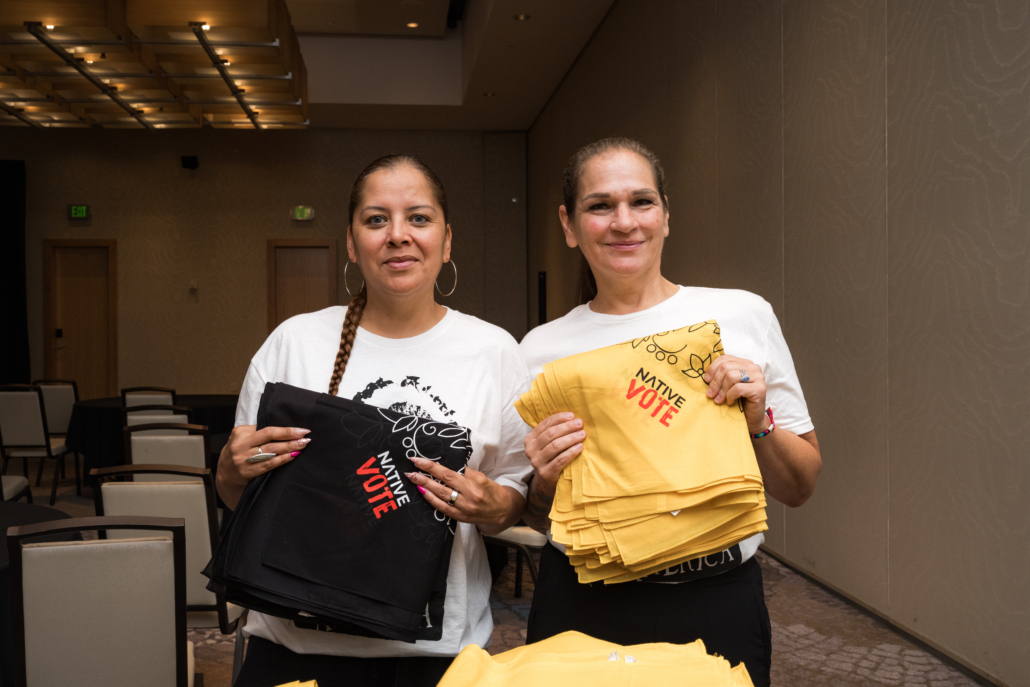
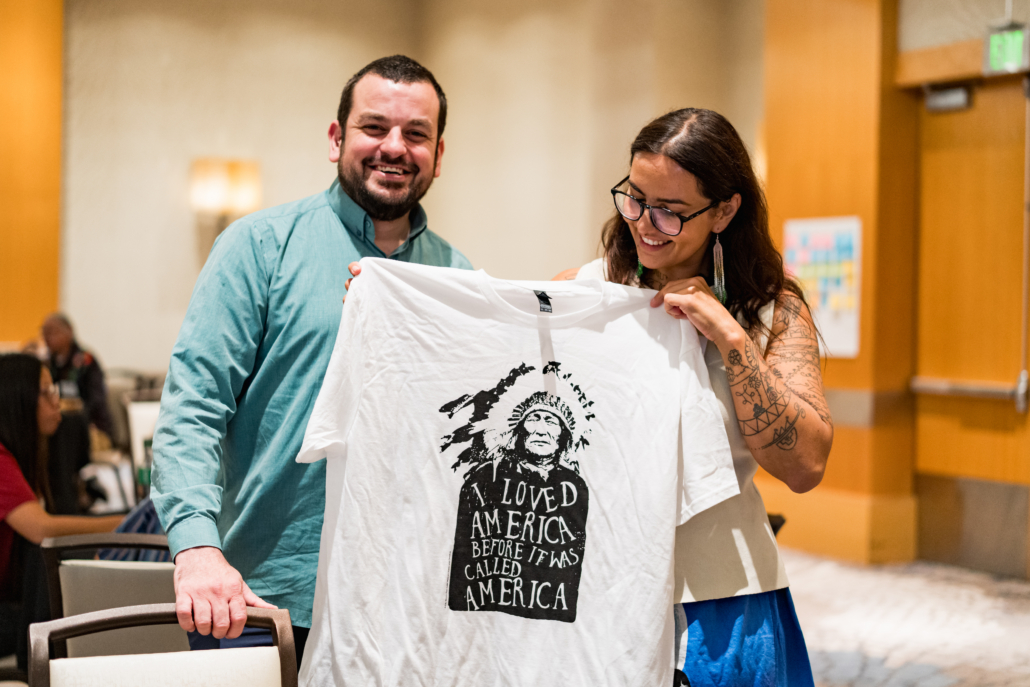
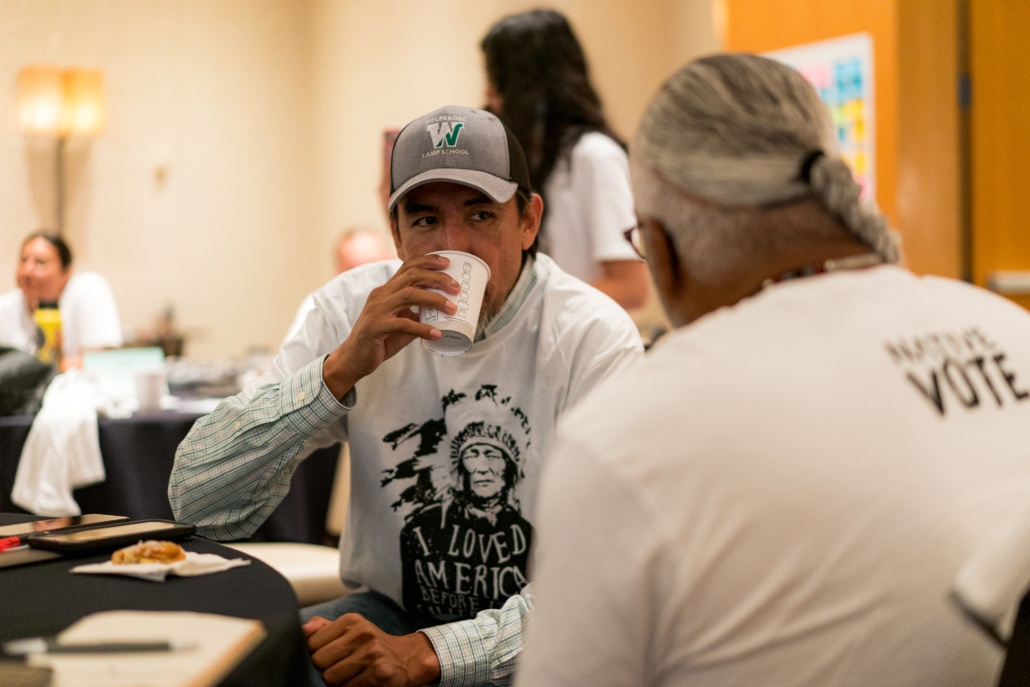
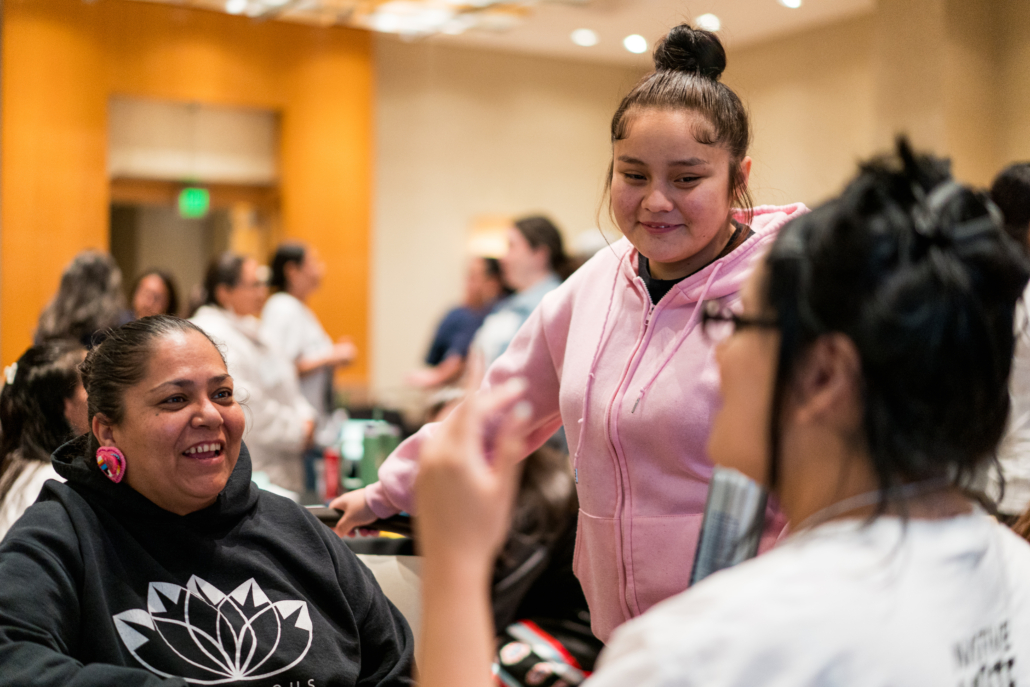
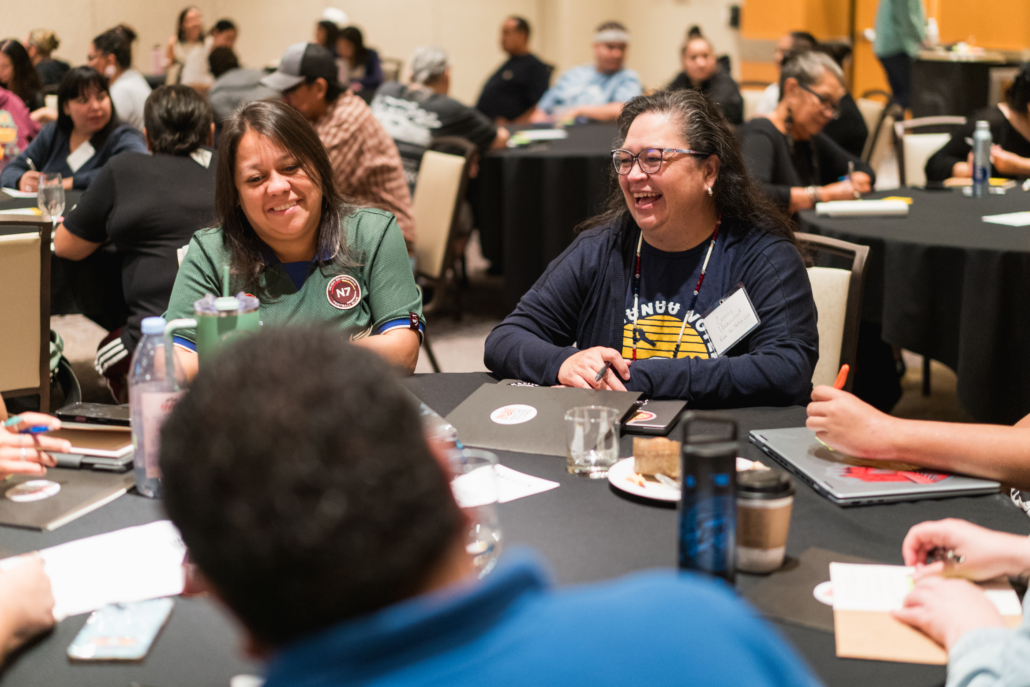
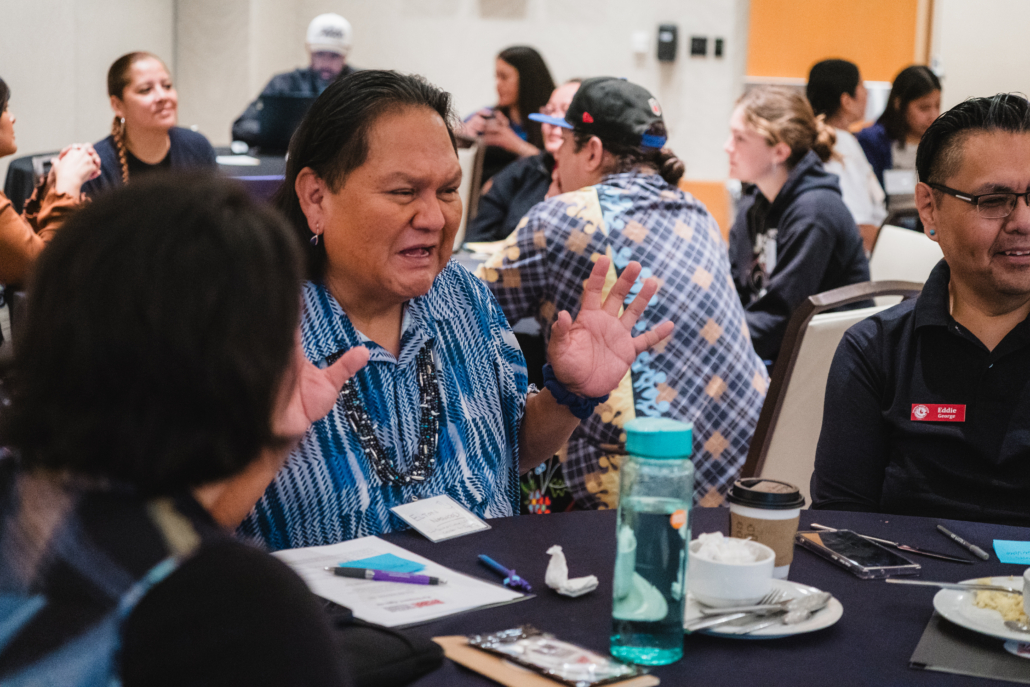
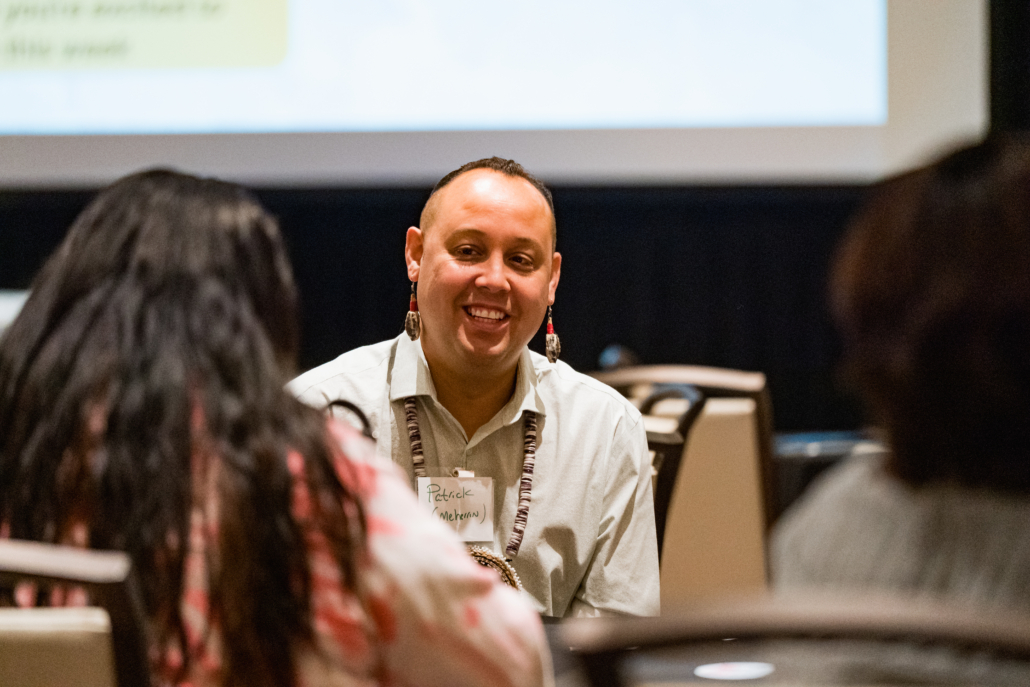
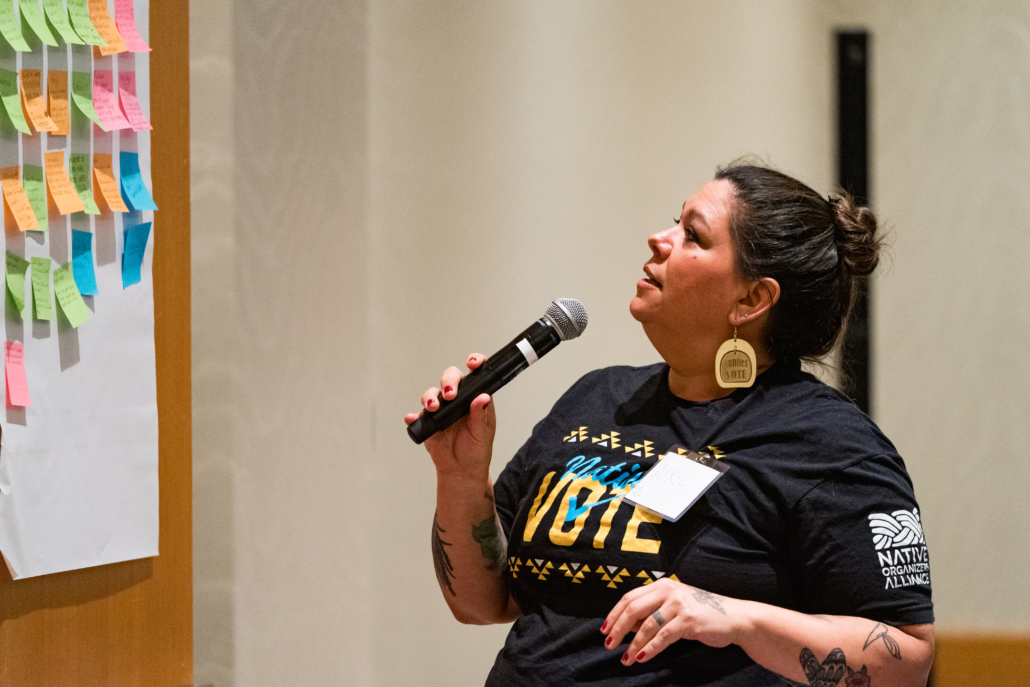
80 Native leaders and organizers working to get out the vote!
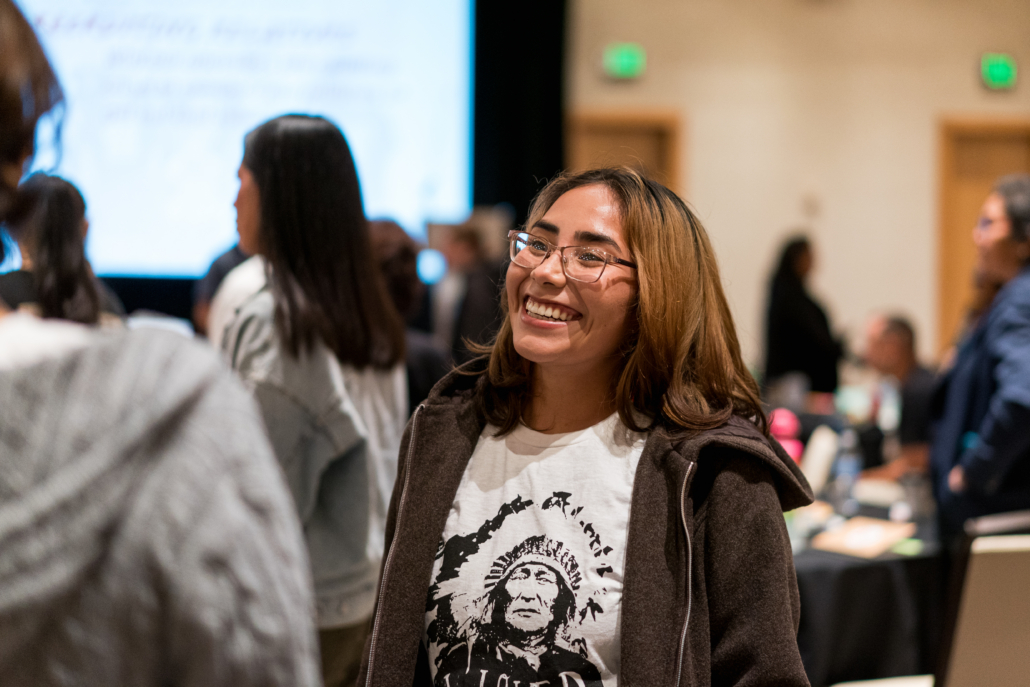
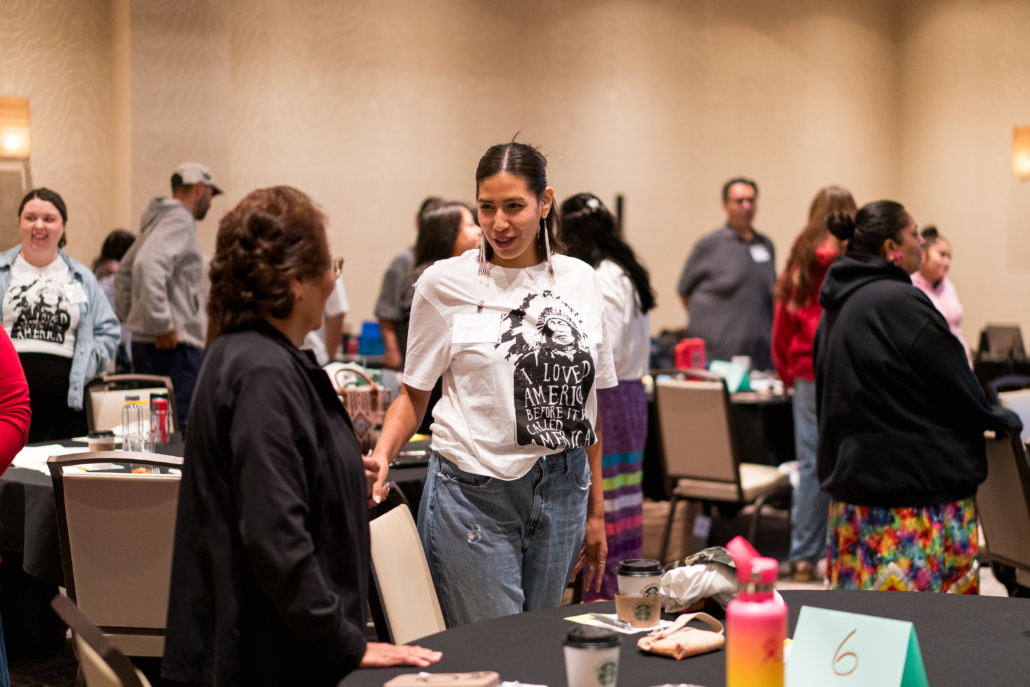
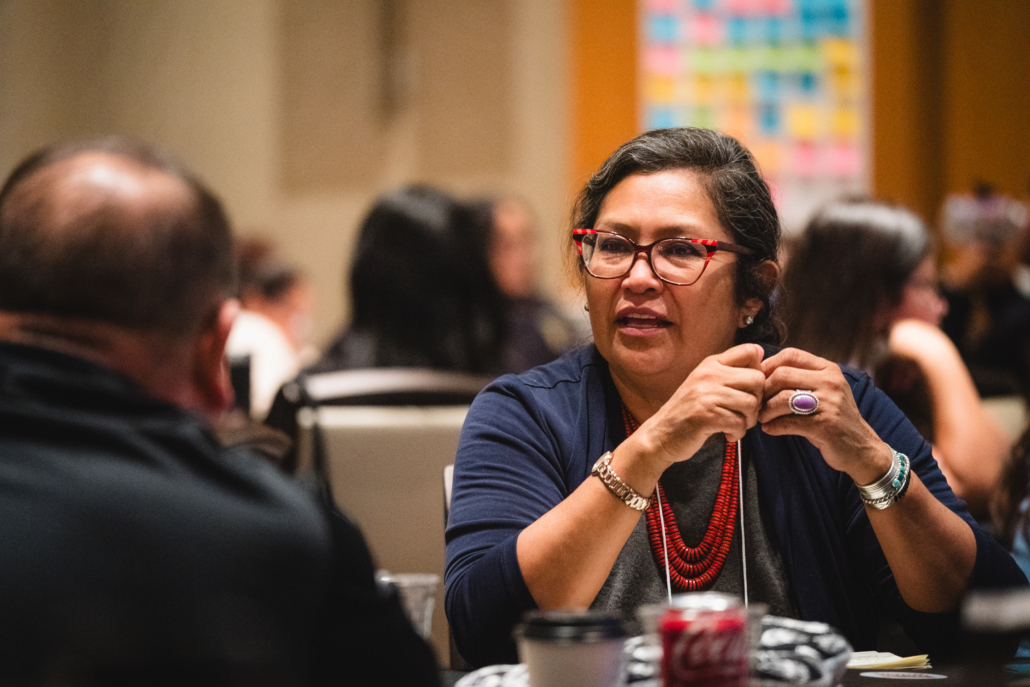
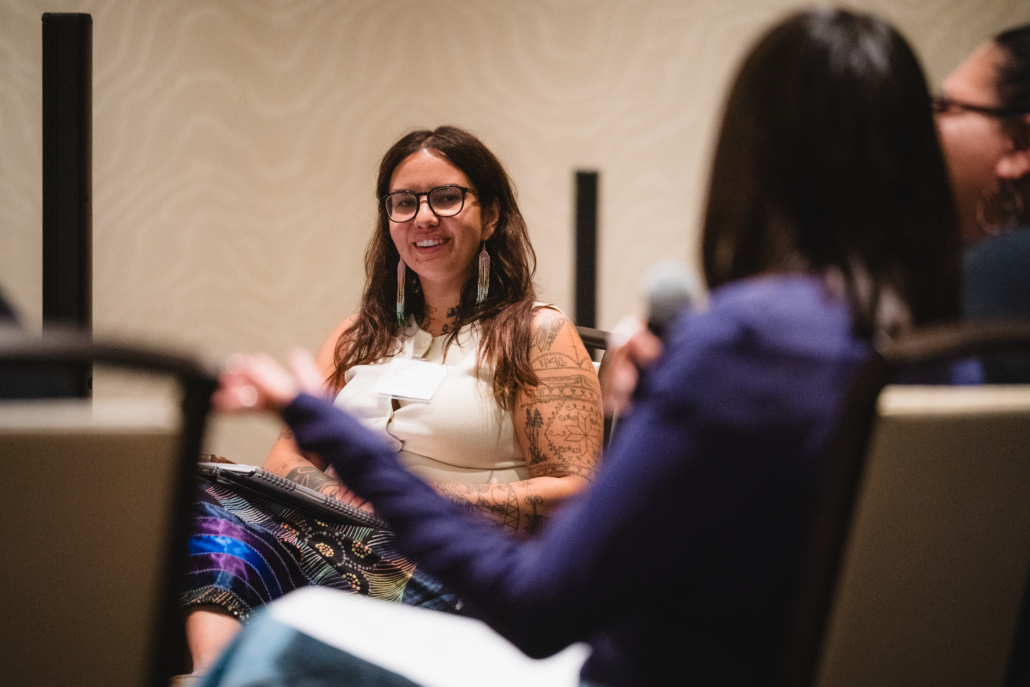
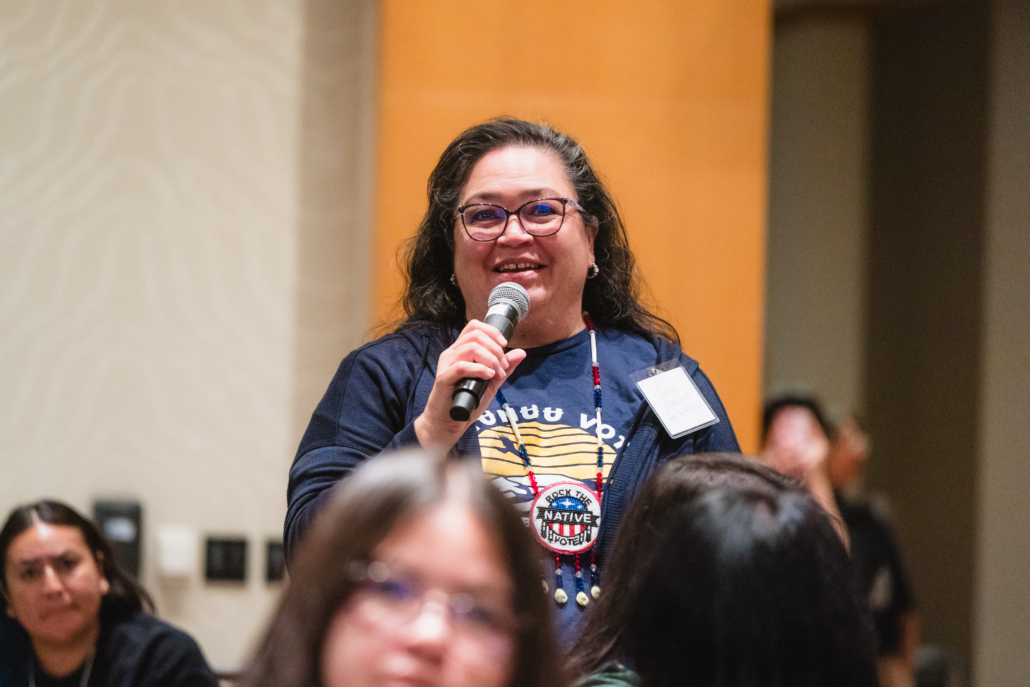
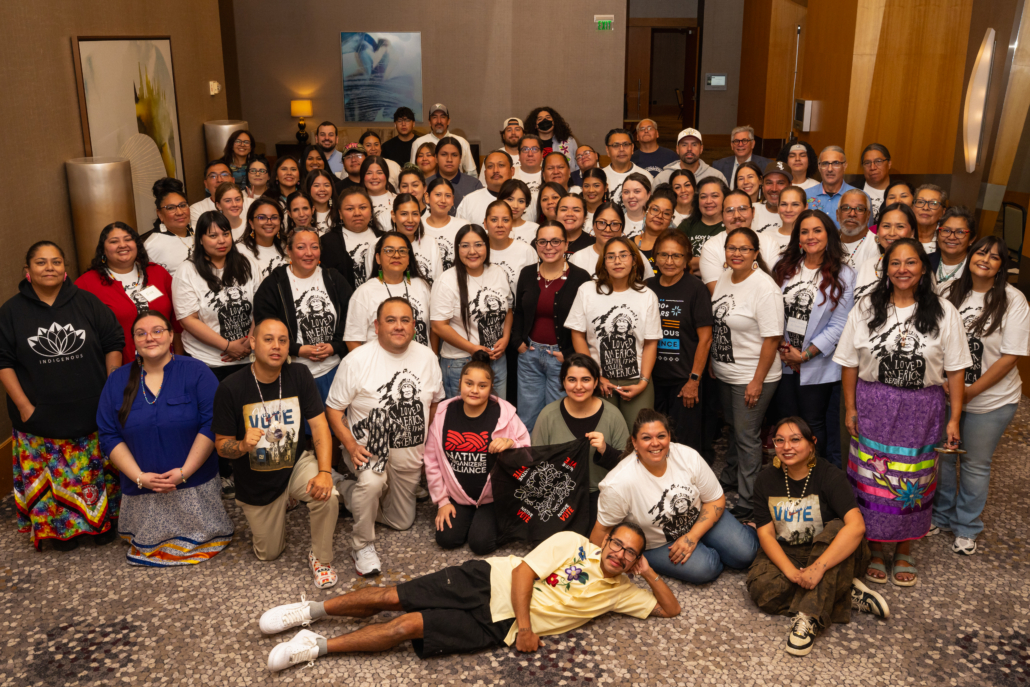
We brought 80 Native leaders and organizers from 24 different communities to Detroit for a Know Your Rights and Civic Engagement training to learn and unite for our communities.
Our Native partner organizations and leaders have been practicing traditional relational organizing from Alaska to North Dakota to North Carolina to the Navajo Reservation, holding conversations with 1,500 of their neighbors and relatives as part of our Seven Generations Community Survey project. We covered the cost of lodging, food, and travel for participants from across Turtle Island. And we’re continuing to support organizing on the ground with paid NOA Organizing Fellows who will work with Tribes and partner organizations on non-partisan civic engagement through Election Day and beyond.
At the training, we shared our collective history of organizing for voting rights. We learned skills for maintaining a peaceful atmosphere at the polls and to prepare to respond to forms of voter suppression — including de-escalating potential conflicts.
This work is powerful. Ensuring the safety of our communities when they vote, protecting air, water, land, and sacred places is not a small task. It’s a mission with meaning and purpose in honor of our ancestors, our relatives, and generations to come.
It’s also spiritually uplifting. It’s rewarding. The sense of empowerment is contagious. Everyone is a teacher and an organizer.
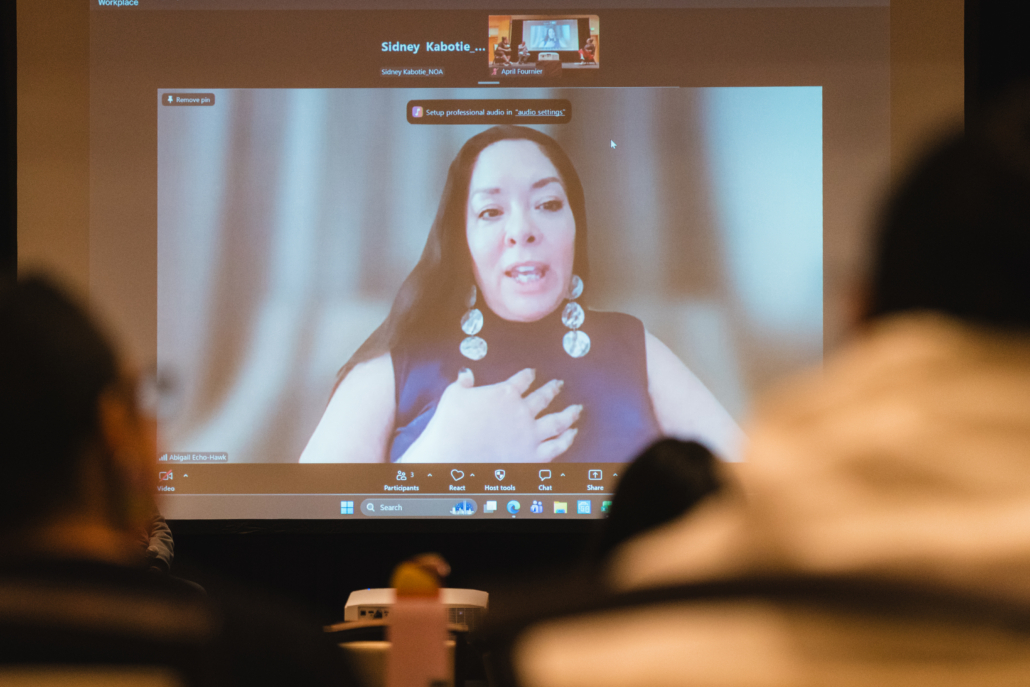
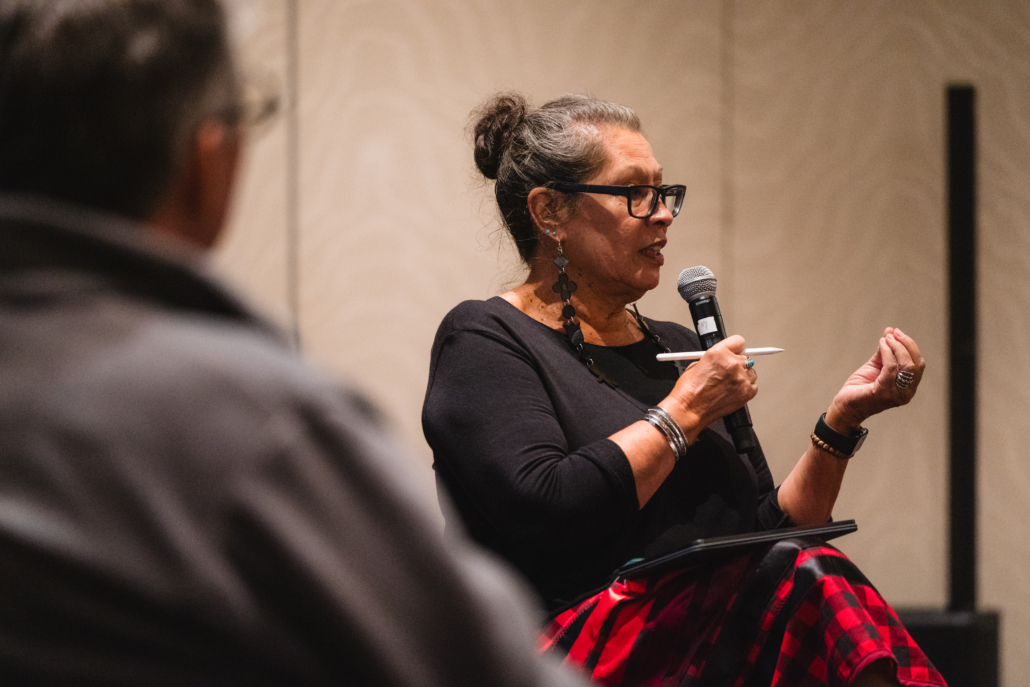
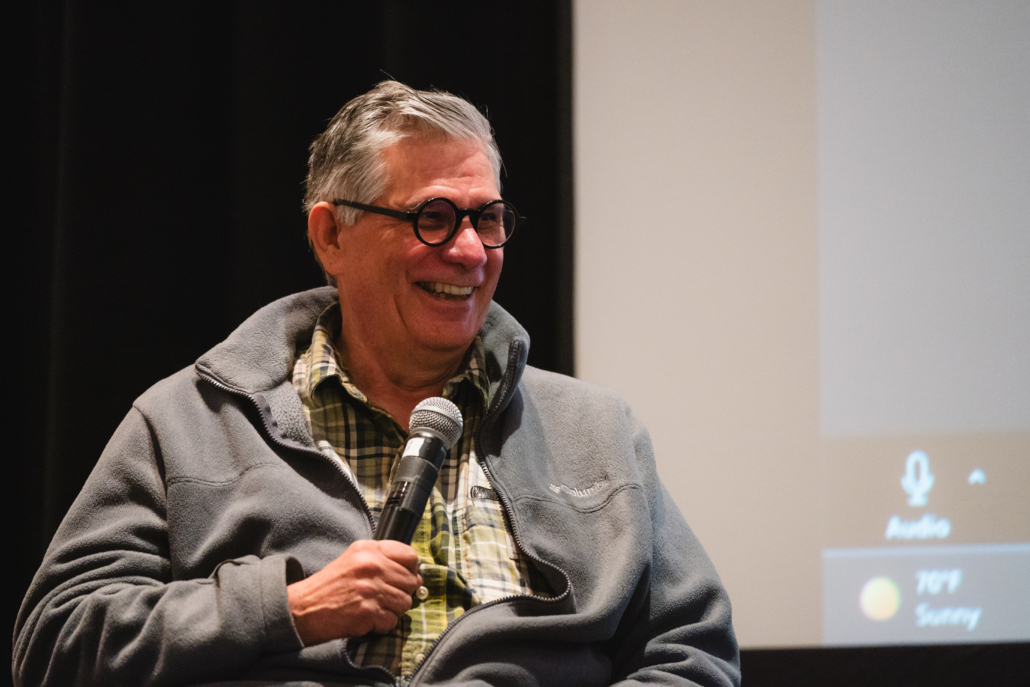
The photos and testimonies from some of the 80 Native leaders and organizers who came to Detroit for our recent Voting rights training speak for themselves.
“My priority ballot issue is to encourage our Two-Spirit and Native LGBTQ+ community members to be part of the voting process, to ensure they have a plan… to make informed decisions… Being able to be engaged in this way is really important.” – Elton Naswood, Diné,LGBTQ2S Center for Equity
“I think it’s really valuable work… representation does matter, to have my children see me in these types of roles and that I make my time and space valuable.” – Blaine Parce, Assiniboine and Sioux of the Fort Peck Tribe
“It was so cool to meet other Native people across the country doing the same work.” – Kaia Aiello, White Mountain Apache, Arizona Native Vote
“This election is very important for Crow Country. We really hope to get more Native Americans in office… everything sacred is on the ballot.” – David Blaine, Crow Nation
The post 80 Native leaders and organizers working to get out the vote! appeared first on Native Organizers Alliance.
Truth, Justice & Indian Residential School Records
Content Warning: This Brief describes violence and abuse that took place during and after the Indian Residential School System. The content is difficult and it may be upsetting. Read with care.
–
“There’s not a single Indigenous person in Canada, who has not been touched by the legacy of Residential Schools.” – Justice Murray Sinclair, Chair of the Truth and Reconciliation Commission (TRC)
I WAS IN the room in 2015 when the late Justice Murray Sinclair stood at a podium at the final event of the Truth & Reconciliation Commission (TRC) and said those words. The TRC commissioners were releasing their 94 Calls to Action, a roadmap to reconciliation for Canada and I was there reporting for CBC News.
I believed what Justice Sinclair said; he and the other Commissioners had just spent the last six years, travelling across the country to hear the stories of Survivors. But if I am honest, at the time, I didn’t really know or understand how my own life had been shaped by my family’s experience in residential school.
It wasn’t until years later when I learned that my late father Howard Cameron was sexually abused by a priest when he was a boy at Residential School, that I began my own journey of understanding.I wasn’t close to my dad. My parents split up when I was seven years old and I think at the time, I mostly felt relief. The father I remember from my childhood was angry and violent, and the memories I have of him, kept me at a distance from him my whole life.
But learning about what had happened to him when he was a boy at residential school unlocked some empathy and curiosity. It made me want to get closer and to understand him better. It also made me realize how little I knew about my dad’s childhood. I knew that he had gone to a residential school but I didn’t know where he went, or for how long, and I never really thought about how what happened to him there might have affected the father that he was to me.
Fig. 1: Cover image for Stolen: Surviving St. Michael’s podcast
So I decided to investigate the residential school my dad went to and see if I could find the priest who abused him.
It was the beginning of what turned out to be a year-long investigation documented in our podcast Stolen: Surviving St. Michael’s, where our team uncovered a shocking level of abuse at the St. Michael’s Indian Residential School in Duck Lake, Saskatchewan. The Independent Assessment ProcessIn the very first interview I did for the podcast, I learned the name of a Catholic priest that my dad’s brother, Ivan Cameron, had accused of sexual abuse: Father Gilles Gauthier. I learned Gauthier was a principal at St. Michael’s and he was there at the same time as my dad was. I found a newspaper article from the Edmonton Journal, featuring Father Gauthier and a local boxer, who were both working with ‘natives in Hobbema’ in 1989. The long profile covers his childhood in Quebec and his career as a priest (including his time at St. Michael’s and later in Bangladesh working with Mother Theresa) but it was a quote near the beginning I found most interesting. Gauthier was explaining his views on non-violence and recalled a conversation he had when ministering to people in prison.
“Like, the guys in the penitentiary, I said to them: “I would rather be a sissy and be free than to have lots of muscles and be behind bars. I have no muscles but I am free. The Father pauses. “I told them also, ‘Maybe I should be in here also. But I never got caught!”
Fig. 2: Clipping from the Edmonton Journal, February 5, 1989
Could Gauthier be the priest who abused my father? I learned that my dad never told anyone in my family the name of the priest who abused him; but he likely had to disclose it when he applied for compensation, as part of the Indian Residential School Settlement Agreement (IRSSA).
More than 38,000 survivors applied for compensation for residential school abuse through the Independent Assessment Process (IAP) and the records produced in their claims make up the most comprehensive archive that exists of Survivor testimony — five times the number of Survivors applied to the IAP than gave testimony to the TRC.To apply for the IAP, Survivors first had to fill out an application form and to describe in detail the abuse they experienced in residential school. They were also compelled to name their alleged abusers. Though, if they were not able to, they were warned that they may not get an IAP hearing.
Fig. 3: Excerpt of IAP application form
If their application was accepted, Survivors were given a date for a hearing with an adjudicator, where they had to testify in great detail about their abuse.
In his book, Broken Circle, The Dark Legacy of Indian Residential Schools: A Memoir, the late Theodore Fontaine described his IAP hearing. It lasted over 8 hours:
“I turn the handle, open the door and slowly step into the room. I am almost overcome with panic. My eyes can’t stop darting around various parts of the room and I feel a deep stab of fear. I almost turn around and walk back out. This is eerily similar to what I experienced when I was a seven-or eight year old boy and heard Father P. directing me in a commanding, low whisper, “Come in, tci-ga (little boy).”
Fontaine writes that he asked for a hearing far from his community. He didn’t want the pain of those memories associated with his home. . Inside the room, he had a friend and Elder Barney Williams for support as the government adjudicator presided over the hearing.
“The adjudicator’s questions become even more vivid and probing. The abuse I have endured in this particular incident has never been discussed except superficially, and never as graphically as in this moment. My anger and frustration must be obvious as I struggle to remain in my seat. I fight off a frantic urge to grab and slam the water jug, and whatever else is on the table, against the wall. In her wisdom, the adjudicator suggests that this would be a good time to have a break. I’m overwhelmed by emotion and fear I’m having some kind of attack and will collapse before we’re done. I push back from the table and stagger to my feet. The floodgates open and I try mightily to hold back tears and sobs.
Barney is standing beside me, helping me up and guiding me to the door. It opens to the waiting area; the bright daylight hits my eyes, and I reach for my wife as she flies from the waiting area to hold me in her arms. I can’t envision how I look, and only realize later that this ordeal is nothing I have experienced before. It has touched my wife, her soul and consciousness, as deeply as it has mine. She’s frightened. Confronting this particular incident of abuse aloud has painted shock and horror all over me. My face is burning and I’m blind with tears. I’m shaking and falling. Never did I imagine that this hearing would create such panic in me.”
The Scale and “Levels” of AbuseSurvivors were promised that testimony in IAP hearings would remain confidential. So very little information from the IAP has ever been made public. But through their testimonies, the IAP Secretariat knows about the scale of abuse at every single residential School that was covered by the Settlement Agreement. They know what kind of abuse happened, they know how many people were accused of abusing kids and they know the names of alleged abusers.
When my dad sent in his application, if he had named his abuser, the priest and the Oblates of Mary Immaculate (OMI) would have been notified. In February 2016, investigative journalist Martha Troian reported that the IAP records include the identities of over 5,000 alleged abusers; each tracked down, sometimes by private investigators. One of my uncles believed that when he named Father Gauthier as his abuser in his IAP hearing, that it would trigger a criminal investigation. But the IAP only tracked down alleged abusers to invite them to participate in the process and be given a chance to respond to the allegations made against them.
If Survivors were believed and their claims were deemed credible, they were compensated based on the severity of the abuse and the level of harm the adjudicator believed they had experienced.
Fig. 4: Levels of abuse used by IAP Adjudicators to assess
the level of compensation
While researching for our podcast, there were IAP documents accessible at the courthouse in Toronto. They were draft reports created by the IAP Secretariat to report progress to the court. There was more information in those court documents than I’d ever seen about the IAP. There were statistics about IAP hearings and decisions broken down by age, gender, province and church denomination. There was also information about compensation amounts and the levels of abuse and harm proven in the claims.
Fig. 5: Scans of tables found in IAP draft report
I learned that most of the compensated claims were designated as SL 4 (Fig.4) which was defined by:
SL4 – Sexual abuse level 4
-
- One or more incidents of anal or vaginal intercourse.
- Repeated, persistent incidents of oral intercourse.
- One or more incidents of anal or vaginal penetration with an object.
And the vast majority of claims that were compensated were found to be Harm Level 3 (Fig. 5) – “Continued detrimental impact”. Evidenced by:
-
- Difficulties with interpersonal relationships, occasional obsessive-compulsive and panic states, some post-traumatic stress disorder, occasional sexual dysfunction, addiction to drugs, alcohol or substances, a long term significantly disabling physical injury resulting from a defined sexual assault, or lasting and significant anxiety, guilt, self-blame, lack of trust in others, nightmares, bed-wetting, aggression, hyper-vigilance, anger, retaliatory rage and possibly self-inflicted injury.
When the IAP hearings were happening in our community, my dad was involved as a cultural support worker. My stepmother Norlaine said that after sitting with other Survivors during their hearings, he would come home drained. Sometimes he’d get a call in the middle of the night and he would go and sit with somebody who just needed to talk. In the weeks before his own hearing, he became more agitated and upset. She told me that about a week before his hearing was to take place, he broke down and told Norlaine that he couldn’t do it.
My father never received compensation through the IAP process. But his application form is part of the archive. And almost certainly, it will be lost after September 19, 2027. That’s when the records of nearly all of the 38,000 Survivors who applied for compensation from the IAP have been ordered to be destroyed by order of the Supreme Court of Canada.
Whenever I tell people that the most comprehensive archive of Survivor testimony from Indian Residential Schools is set to be destroyed, they react with disbelief and then confusion. The Supreme Court ordered the destruction of records relating to atrocities committed in Indian Residential Schools? How? Why? The answer is complicated and I’m actually working on a podcast about the case and the decision — but essentially it’s an issue of privacy. Survivors were promised confidentiality and the IAP did not obtain their consent to preserve their records.
The Supreme Court decision was made in 2017. It mandated a ten year window to allow for Survivors to “opt in” if they wanted their records preserved.
However, in ten years, only around 100 Survivors have applied to have their records kept with the National Centre for Truth and Reconciliation. The decision to preserve their records can only be made by Survivors. Accountability and the ArchiveWhen we couldn’t get my dad’s IAP record but were still looking for the priest who abused him, one of my former colleagues, Chantelle Bellrichard, had an idea. To understand what was happening at St. Michael’s, we could go back to the lawsuits that Survivors filed before the IRSSA. Between 14,000 – 20,000 lawsuits were filed by Survivors, mostly in the 90s and early 2000s, attempting to hold the government and churches accountable for abuse they endured in Indian Residential schools. It was the largest class action lawsuit in Canadian history, at the time. If we could find those documents, what would they tell us about abuse at St. Michael’s?
We filed Access to Information requests with Justice Canada and received 485 file numbers of lawsuits from Survivors of St. Michael’s. We then travelled to courthouses across Saskatchewan to access them. The court documents painted a shocking picture.
Fig. 6: Boxes of files at the Regina courthouse
We found more than 200 allegations of sexual abuse against 17 priests, 13 nuns and 15 staff members.
Many of the allegations were not a single incident but abuse that was ongoing, sometimes for months, even years. In our podcast, we named all of them:
Anthony Duhaime Georges Chevrier Gilles Gauthier Denis Dubuc Georges Latour Eugene Labonte Georges Roussel Armand Allard Antonio Alberti Laurent Houde Ernest Lacombe Louis-Clement Latour Lionel Dumont Armand Rodrigue Irenee Gauthier Toussaint Bouchard Irene Lalonde Bernadette Lemay Brigitte Simard Lucienne LaFlamme Laura Fortier Therese Gosselin Lucille Hudon Marie Rose Gauthier Roseanne Roy Anna Gaudet Elodie Dery Marguerite Lajeunesse Edna MaroisMost of these allegations were never tested or proven in court because many of the claims were dropped so that survivors could participate in the IAP.
Fig. 7: Table from IAP draft report showing compensated claims by Indian Residential School
We knew that although we had uncovered a staggering level of abuse at St. Michael’s, it was not the full picture. In the IAP documents, we saw that 660 Survivors were compensated for abuse at St. Michael’s.
Early on in our investigation, after hearing that my uncle Ivan Cameron accused Father Gauthier of sexual abuse, I reached out to Ken Thorson, who was at the time, the head of the Oblates in Canada. The Oblates ran most of the Catholic-run Indian Residential Schools including St. Michael’s. When I first asked Ken Thorson about Gauthier, he said he’d never heard of any allegations of sexual abuse against him. After hearing his name several more times in interviews and court documents, I asked again, and Thorson told me that since we last spoke, he’d asked around to other priests and OMI staff and no one had ever heard of allegations against him.
One of the court documents we found from St. Michael’s was my uncle Ivan’s statement of claim where he alleged that he was brutally abused by Father Gauthier daily for years as a boy at St. Michael’s. I sent it to Ken Thorson. After that, Thorson wrote back with new information. He said that a review of legal records from Oblate-run residential schools revealed that Father Gauthier was named in 23 IAP decisions, and that 16 of those claims were deemed by the IAP to be credible allegations of sexual abuse against Father Gauthier. As far as we know, he has never been charged or investigated for any crimes relating to abuse at Indian Residential Schools. Gauthier died in 2024.
There were 140 Catholic priests who worked in residential schools and the Catholic Church knows how many of them were credibly accused, as they were sent every single claim made by Survivors through the IAP. Last December, I attended a gathering that included many Survivors. When the destruction of the IAP records came up, one of them addressed the room and said,
“Who is being protected by the destruction of these records? Not me.” The Indian Residential School Records ProjectEven after the podcast was released, I knew that I wasn’t done with the story. I had an incredible team and unprecedented support to tell the story of St. Michael’s, but it felt unfinished. I heard from so many other intergenerational survivors who said it felt like I was also telling their story. They had grown up with parents or grandparents who attended residential schools, but who never talked about it and had the same questions I did about what happened to our relatives at those institutions and how it shaped our lives. I realized how lucky I was that I was able to investigate my own story, but how unfair it was that so many other stories wouldn’t be.
What late Justice Murray Sinclair said in 2015 still echoes in my mind. As intergenerational survivors, we have all been affected by what happened in those schools and we should all have the right to truth.
So earlier this year, I started the Indian Residential School Records Project. Our goal is to try to replicate the work we did on the podcast but to go further — to create a new archive from the lawsuits Survivors filed before the Settlement Agreement. I’m collaborating with Kimberly Murray (now at Queen’s Law and former Executive Director of the TRC and Independent Special Interlocutor for Missing Children and Unmarked Graves), and the Yellowhead Institute, the School of Journalism and the Lincoln Alexander School of Law at Toronto Metropolitan University. We will be working with Survivors, family members and communities to decide on how to best preserve and share these sensitive records.
We’ve spent the last several weeks in courthouses in Toronto, Ottawa, and Cochrane, scanning over 70 boxes of court records related to Indian Residential Schools and it’s clear just how much truth there is left to uncover.
We are still learning so much about the experiences of children at Indian Residential Schools but even our initial research has raised some serious questions about the process surrounding the impending document destruction.We are hoping that our work may help in the efforts others are making to reach Survivors to give them information about, and help to exercise the option, to preserve their records.
On September 30th, 2026, Yellowhead Institute hosted a special event on this topic, The Right To Truth: Protecting Indian Residential School Records featuring Kimberly Murray, Connie Walker, Marie Wilson and Stephen Kakfwi. Watch a recording of the event here.
Citation:
Walker, Connie. “Truth, Justice & Indian Residential School Records” Yellowhead Institute. Oct 06 2026. https://yellowheadinstitute.org/2026/truth-justice-indian-residential-school-records
Photo by Crystal Gamble courtesy of Connie Walker
The post Truth, Justice & Indian Residential School Records appeared first on Yellowhead Institute.
Dozens of Indigenous herders file lawsuit against carbon project in Kenya
Summit Gathers Indigenous and Local Communities to Save Peatlands in Thunder Bay
Living Peatlands Gathering in Thunder Bay, Ontario, October 3 to 5, 2026 brings delegates from the South Pacific, Aotearoa, Canada, Finland, Alaska, the UK, California and other geographies to gather and discuss the urgency of protection and restoration of peatlands as a part of the Snowchange Climate Breakthrough Initiative.
Tahltan peatland at 30 mile, BCWe’ll learn about important methods and approaches to peatland and wetland conservation and restoration from across the Living Peatlands Initiative network. We hope to not only learn from each other, but also to identify ways to deepen coordination to support healthy peatlands and wetlands across the circumpolar region and worldwide.
In 2024, Snowchange Cooperative received a Climate Breakthrough Initiative Award to expand on its successful peatland restoration work in Finland through a circumpolar and circumboreal network.
This network connects local efforts and action to conserve and restore peatlands by supporting the work of hubs in Canada, northern MN, northern Europe, and the Pacific. By linking these hubs, Snowchange aims to foster knowledge sharing, strengthen Indigenous and local governance, and protect and restore peatlands to preserve or renew their healthy ecosystem function.
In 2025, the first Living Peatland hubs in northern MN (Sax Zim Bog) and northern Canada (Gwich’in settlement area) were announced and an exchange visit was held in Finland, where representatives from North America learned about Snowchange’s approach to peatland restoration.
In 2026, we have been broadening connections, developing a website and communication campaign, and deepening discussions in anticipation of the gathering in Thunder Bay.
We will report the results from the gathering in October and look forwards to all delegations to Thunder Bay!
30-mile peatland, BC“This is not conservation – it’s a cartel.” Unique Indigenous gathering issues hard-hitting landmark declaration
The Fine Print I:
Disclaimer: The views expressed on this site are not the official position of the IWW (or even the IWW’s EUC) unless otherwise indicated and do not necessarily represent the views of anyone but the author’s, nor should it be assumed that any of these authors automatically support the IWW or endorse any of its positions.
Further: the inclusion of a link on our site (other than the link to the main IWW site) does not imply endorsement by or an alliance with the IWW. These sites have been chosen by our members due to their perceived relevance to the IWW EUC and are included here for informational purposes only. If you have any suggestions or comments on any of the links included (or not included) above, please contact us.
The Fine Print II:
Fair Use Notice: The material on this site is provided for educational and informational purposes. It may contain copyrighted material the use of which has not always been specifically authorized by the copyright owner. It is being made available in an effort to advance the understanding of scientific, environmental, economic, social justice and human rights issues etc.
It is believed that this constitutes a 'fair use' of any such copyrighted material as provided for in section 107 of the US Copyright Law. In accordance with Title 17 U.S.C. Section 107, the material on this site is distributed without profit to those who have an interest in using the included information for research and educational purposes. If you wish to use copyrighted material from this site for purposes of your own that go beyond 'fair use', you must obtain permission from the copyright owner. The information on this site does not constitute legal or technical advice.
 This site is not the official webpage of the Industrial Workers of the World.